
Guide
Dealing with the monster that carries a bomb
How to read the monster that attacks with a bomb in R.E.P.O.: the effects and voice lines are separate, the fuse tells, ignites and loops on a curve, and being stunned or attacking are split into their own sounds.
Applies to
0.4.0, read from the copy of the game this site was built from (see the sources page)
Before you start
- A run in progress
- Sound you can hear over the level
- A route out of the room
Steps
- Listen for the fuse rather than watching the bomb, because the tell, the ignition and the burning loop each have their own sound.
the fuse has a tell, an ignite and a loop of its own - Give the loop a curve rather than a steady volume, because the burning sound is played on one.
the fuse loop is played on a curve of its own - Treat the explosion tell as the last warning you get.
there is a separate sound for the tell before the explosion - Know that the monster speaks and thumps separately, because deaths, jumps and landings each have an effect and a voice line.
deaths, jumps and landings each have an effect sound and a voice line - Read its approach from the short and long move sounds and the footstep.
it has a short move, a long move and a footstep sound - Judge a hit by its weight, because light, medium and heavy impacts sound different.
impacts are split into light, medium and heavy - Know that an attack is announced by a breaker rather than by the voice alone.
attacks run through their own breaker - Expect the idle noise to be broken up as well.
the idle noise has a breaker of its own - Treat a stun as three sounds, because being stunned has an introduction, a loop and an outro.
being stunned has an intro, a loop and an outro - Do not trust your own ears for volume, because the monster's output can be scaled as a whole.
the monster carries a volume multiplier for its sounds
Common mistakes
- Watching the bomb and missing the fuse tell.
- Hearing the fuse and assuming it is already lit, when ignition is a separate sound.
- Treating a jump or a landing as one noise instead of an effect plus a voice.
- Relaxing during a stun because only the start was noticed.
- Ignoring the idle breaker and reading a pause as the monster leaving.
Related entries
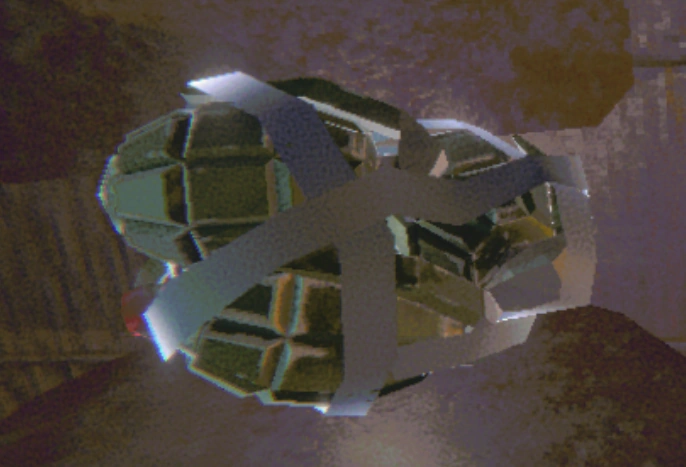 MonstersThe bomb and its fuseThe bomb body hangs on a spring with a source and a target.
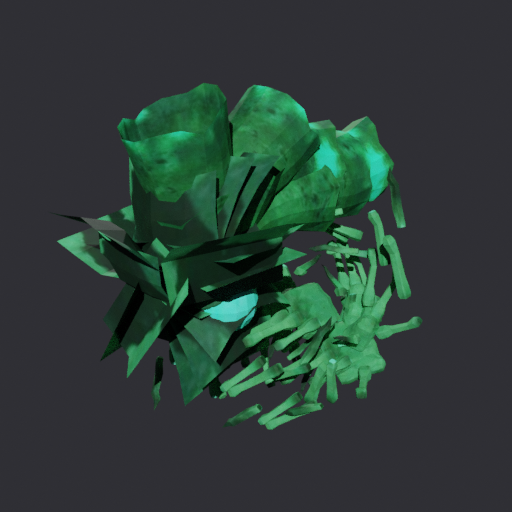 MonstersThe bomb throwerThe monster's body holds the animation, the head, a collider for the head and a place to spawn it.
 MonstersEnemies and what they doThe game defines several distinct monsters rather than one enemy type.
Sources
A local copy of the game, read only. The grounding for each step is listed on the technical reference pages; nothing here is estimated.