
Guide
Reading a monster before it strikes
How to use the sounds and the small movements R.E.P.O. gives a monster before it attacks: the cracks and the clap of the shadow, the stinger when something sights you, where a head is actually pointed, and when a chase begins and ends.
Applies to
0.4.0, read from the copy of the game this site was built from (see the sources page)
Before you start
- A run in progress
- A monster within earshot
- A moment to listen rather than swing
Steps
- Listen for the cracks before the clap: the shadow has a long and a short version of both its neck and its back cracks.
the shadow's animation carries long and short neck and back cracks - Treat the clap as a warning with a flag of its own rather than as flavour, because the animation keeps a tell for it.
the clap has a tell of its own and a second version heard by everyone - Listen for the moment it decides on you, because there are separate sounds for being targeted and for being dropped.
there are targeted and untargeted sounds - Watch what the slap throws off, because the attack has particles of its own rather than being only a sound.
the slap has particles of its own - Watch for smoke as well: a monster can make smoke when it appears.
a monster can spawn smoke as it appears - Do not wait for a roar to know you have been seen, because the game plays a stinger when a monster sights you.
the game has a stinger for a monster sighting you - Read where a head is pointed rather than where the body is, because a head follows a position and a rotation of its own.
a head follows a position and a rotation - Expect a difference between idling and chasing, because the head's follow values are separate for each.
the head has separate position and rotation values for idling and for chasing - Know that a chase starts and ends rather than switching instantly, because there is an offset with an intro and an outro curve and speed.
the chase offset has an intro and an outro curve with a speed each - Do not read the eyes as attention, because they go idle on their own within a time range and limits of their own.
the eyes idle on their own, with a shortest and a longest time and limits in x and y - Know when it is finished: a monster has a freeze time for dying, and it says what kind it is.
a monster carries a freeze time for dying and a type
Common mistakes
- Swinging at the first noise instead of waiting for the tell that means an attack is coming.
- Watching the body and missing that the head has already turned to you.
- Treating a monster's idle eye movement as it having noticed you.
- Walking away from a kill early, before the dying freeze is over.
Related entries
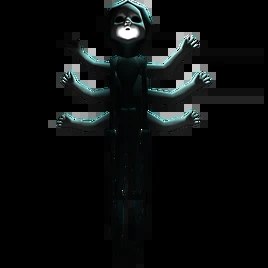 MonstersThe shadow and how it movesIts pose is driven by a spring pose animator with separate bending values for the torso, head, neck and arms.
 MonstersEnemies and what they doThe game defines several distinct monsters rather than one enemy type.
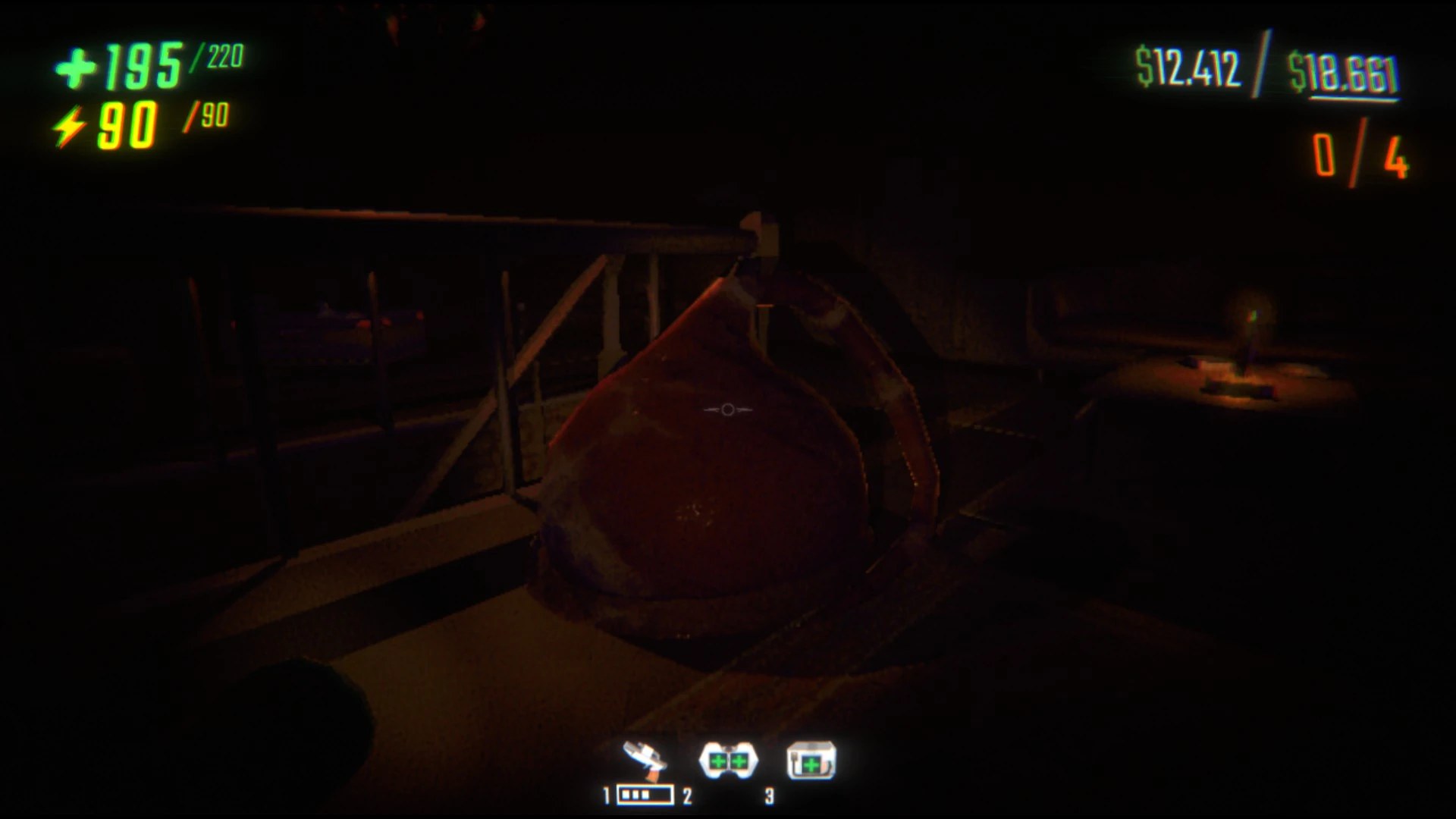 MonstersHow monsters find youThe game tracks which room a player is in.
Sources
A local copy of the game, read only. The grounding for each step is listed on the technical reference pages; nothing here is estimated.