
Guide
The machines that are also traps
What a blender, a gumball machine, a traffic light and a tray do when they go off in R.E.P.O., and what each of them tells you before it does.
Applies to
0.4.0, read from the copy of the game this site was built from (see the sources page)
Before you start
- A level with the machine valuables still standing
- A crew that will not crowd a machine while it is working
- A way to leave a valuable behind if it starts up
Steps
- Treat a blender, a gumball machine, a traffic light and a tray as one kind of thing: a valuable that is also a machine.
each carries the trap state of triggered, active and started, the switch for triggering on a timer and the rarity level at which it goes off - Do not reach into a blender for the money, because it has blades of its own.
it has a timer of its own and blades with a speed and a curve - Listen to a blender, because it says what it is doing.
it has separate sounds for the blades starting, looping and ending, plus a loop for being stuck and one for an empty jug - Expect a blender to throw what is inside it.
it has a bill soup with a curve of its own, a cap that pops with a collider, and particles for the bills, dust and the cap - Look away from the gumball machine rather than at it.
it works on the player with a vignette, a screen spiral, camera zoom speeds and an amount, and it takes aim away - Watch its lids and its eye, because the eye is what does the work.
it has meshes for its lids closed and open, an eyeball of its own and a globe, and the eye has a lock transform and a line of its own - Read a traffic light as a countdown rather than as a signal to cross.
each colour has a length of time of its own and red lingers after the others - Expect a traffic light's zap to be both loud and physical.
zapping shakes the camera with a length, a strength and bounds, has sparks, smoke and a zap particle of its own, and the light torques and tumbles - Count what is standing on a tray before you move it.
what stands on the tray is kept as a group of its own, with particles and colliders for those things
Common mistakes
- Putting a hand into a blender that is still running.
- Meeting the gumball machine's eye instead of turning away.
- Crossing in front of a traffic light while its red is lingering.
- Lifting a tray and losing what was standing on it.
Related entries
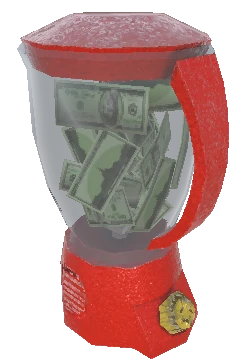 ValuablesThe blender valuable and its bill soupIt keeps whether the trap is triggered, active or started, whether it triggers on a timer, and the rarity at which it activates.
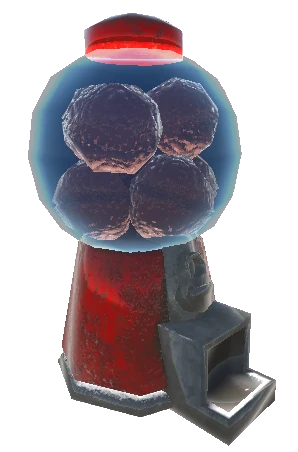 ValuablesThe gumball machine that hypnotises youIt keeps whether the trap is triggered, active or started, whether it triggers on a timer, and the rarity at which it activates.
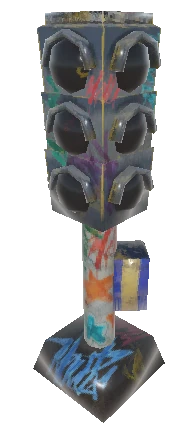 ValuablesThe traffic light that is also a trapIt keeps whether the trap is triggered, active or started, and whether it triggers on a timer rather than on contact.
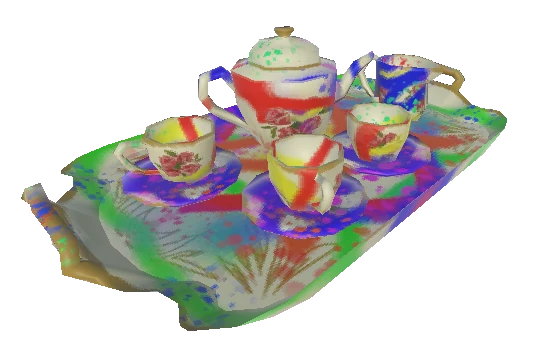 ValuablesThe tray that carries several valuablesWhat stands on the tray is kept as a group of things of its own.
Sources
A local copy of the game, read only. Grounding for each step is on the technical reference pages; no number is estimated.