
Guide
The monsters that hang on springs
Why a family of monsters in R.E.P.O. wobbles: their heads, ears, tails and eyes hang on springs with targets of their own, and the game keeps a whole second set of sounds for when they change size.
Applies to
0.4.0, read from the copy of the game this site was built from (see the sources page)
Before you start
- A level with one of the spring-built monsters in it
- A crew spread out enough to hear which sound came from where
- Room to back off rather than stand your ground
Steps
- Expect some monsters to be built as parts that hang on springs rather than as one rigid body.
the elsa's head, tails and ears each have a spring with a transform and a target of their own - Read a swinging part as the spring doing its work rather than as an animation.
its jaw, feet and idle and wiggle transforms are sprung separately from the head - Expect the whole set of springs to move together, because they share two multipliers.
the hanging parts share a speed multiplier and a damping multiplier - Do not judge a monster's size from the model alone, because it carries two colliders.
it keeps a collider for its small size and one for its big size, placed apart from the visuals - Expect the game to keep different art for the two sizes.
it ships one fur texture for the small size and a different one for the big size - Listen for the change between sizes, because it is staged with its own sounds.
the change has a start, a stinger, limbs breaking, the head looking up and a landing, each with a sound of its own - Expect each of its noises to exist twice, small and big.
barks, footsteps, hurt, jump, landing, death and panting are each kept in a small version and a big version - Know that a big bark is not always just for you.
one of its big barks has a version for nearby players and a version for everyone - Expect another monster to be built the same way, with its own change of form.
the duck monster's body and head each hang on a spring with a target of their own, and it has a sound for a change of form - Watch a bowtie monster's whole body turn rather than only its head.
its head and both eyes are sprung with targets of their own, and the body turns on a horizontal and a vertical spring
Common mistakes
- Reading a spring-built monster as stiff and standing next to it.
- Judging which size you are facing from the artwork rather than from how it behaves.
- Treating a change of size as silent when the change has a whole set of sounds.
- Assuming a big bark is only for the players close enough to see it.
Related entries
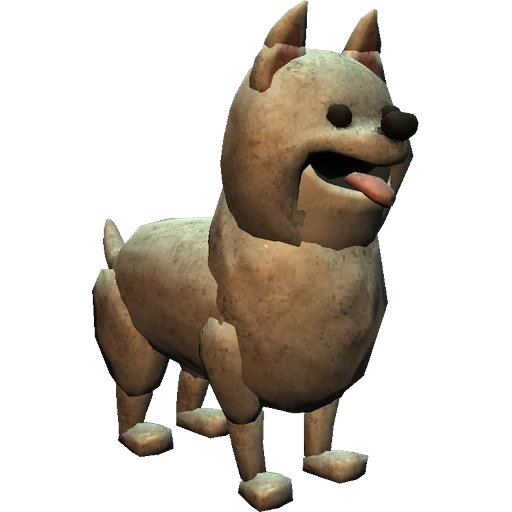 MonstersThe elsa and everything that hangs off itIts head is on a spring with a transform and a target of its own.
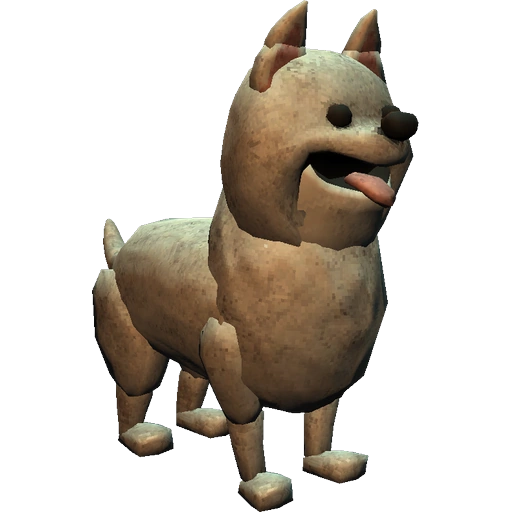 MonstersThe elsa at two sizesIt has a collider for its small size and one for its big size, and a separate death effect for each.
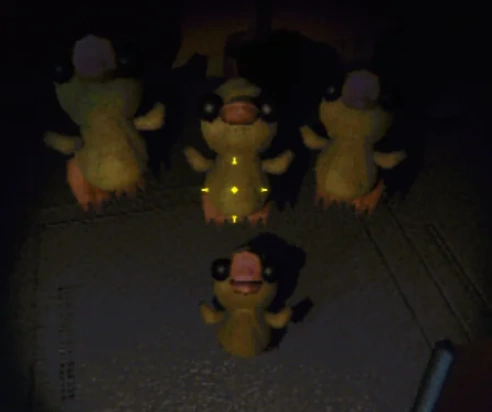 MonstersThe duck monster and its mouthIts body and its head each hang on a spring with a target of their own.
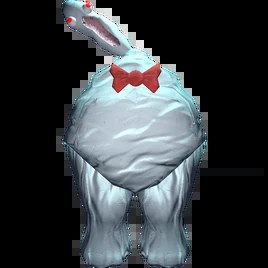 MonstersThe bowtie monster and its yellIts head and both eyes are sprung with targets, and the body turns on a horizontal spring.
Sources
A local copy of the game, read only. Grounding for each step is on the technical reference pages; no number is estimated.