
Monsters · R.E.P.O. v0.4.0 · read from a local copy
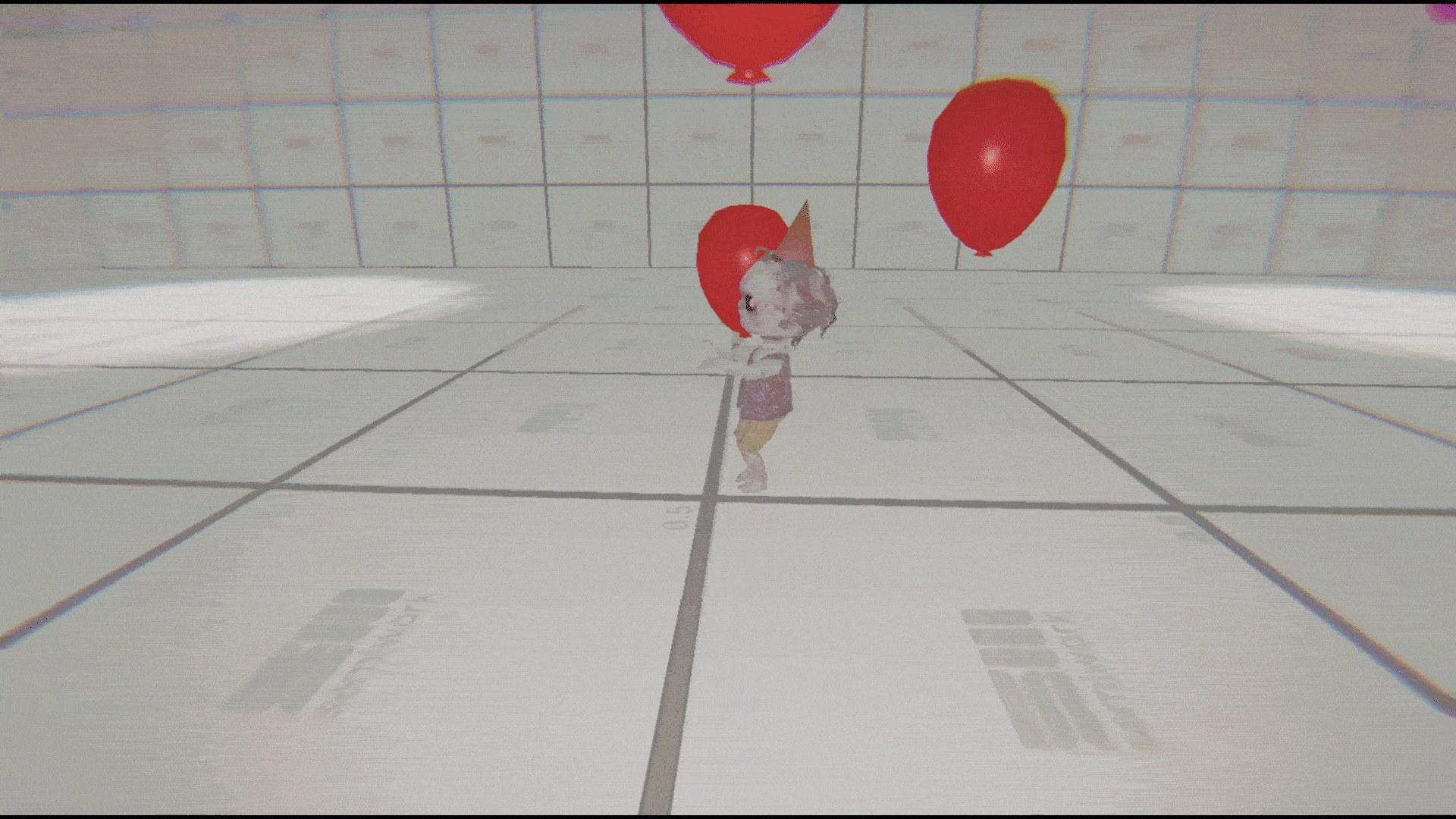
The balloon monster
It keeps a maximum number of balloons, a balloon prefab and the points they spawn at.
One monster in R.E.P.O. does its work with balloons: the game gives it a maximum number, a prefab and spawn points, a blowing state, a pop effect, and checkers for doors and for standing up.
What the game establishes
- It keeps a maximum number of balloons, a balloon prefab and the points they spawn at. (checked against the game's own files)
- It has a state for blowing a balloon up. (checked against the game's own files)
- A balloon popping has an effect of its own. (checked against the game's own files)
- There are collision checkers for a balloon, for standing up and for a door. (checked against the game's own files)
- It has more than one collider, a large one and a small one, with a visual mesh of its own. (checked against the game's own files)
- Its head and both eyes have pivots, and its body has a horizontal rotation spring. (checked against the game's own files)
- It tracks a player target and a state of its own, and hangs from a parent object. (checked against the game's own files)
In play
One of the monsters does its work with balloons rather than with hands. The game gives it a maximum number of balloons, a prefab to spawn them from and a list of points to spawn them at, so the balloons are objects the monster owns rather than an effect.
It blows them up. There is a state for blowing, which is why the monster can be caught in the act of making one larger instead of only appearing with balloons already in place.
Popping one is an event of its own. There is a pop effect and the monster keeps track of the balloon being animated, so a balloon that bursts is something the game knows about.
Balloons have to fit. There are collision checkers for a balloon, for standing up and for a door, which is how the monster knows whether it can rise, whether it can pass a doorway and where a balloon can go.
The monster is built from parts like the others. It has a head pivot and two eye pivots, a visual mesh of its own, and a horizontal rotation spring so its body turns with some weight.
It carries more than one collider: a large one and a small one. That is how one monster can be both easy to hit in the open and hard to catch when it is packed away, without the game writing two enemies.
It keeps a target and a state. A player target and a current state are tracked, and it hangs from a parent of its own, so what it is doing is decided rather than scripted.
The image beside this entry is the game's own: the colour texture of the balloon monster.
What this entry does not tell you: how many balloons it may hold at once, what a balloon does when it reaches you, or how often this monster appears. We have not verified those numbers, so we do not print them.
Related
 MonstersEnemies and what they doThe game defines several distinct monsters rather than one enemy type.
 MonstersThe shadow and how it movesIts pose is driven by a spring pose animator with separate bending values for the torso, head, neck and arms.
Version and sources
A local copy of the game, read only. The grounding for each fact is listed on the technical reference pages; nothing here is estimated. Documented build: 0.4.0.