
How the game behaves · R.E.P.O. v0.4.0 · read from a local copy
The lights and beeps on a vehicle
There is a front and a back light, each with its own renderer and emission colour.
The lights on a vehicle in R.E.P.O. are part of the machine rather than decoration: a front and a back light each have their own renderer and emission colour, they flicker with a minimum time on, reversing can beep on an interval, the boost has a light with a curve, and a hover effect can be scrolled, rotated and scaled.
What the game establishes
- There is a front and a back light, each with its own renderer and emission colour. (checked against the game's own files)
- The lights have a flicker duration and a minimum time they stay on. (checked against the game's own files)
- Reversing can beep on an interval of its own. (checked against the game's own files)
- The boost has a light with a curve and a duration. (checked against the game's own files)
- A hover effect is drawn whole and for its front and back separately. (checked against the game's own files)
- The hover effect scrolls and rotates with noise, and scales with noise, each with a speed and a strength. (checked against the game's own files)
- The effect can be offset per mesh. (checked against the game's own files)
- There is a mesh set aside for grabbing the vehicle. (checked against the game's own files)
In play
A vehicle's lights are wired into the vehicle rather than left to the model. There is a front light and a back light, and each has its own renderer and its own emission colour, which is why one can be dimmed or coloured differently from the other.
They flicker. There is a duration for the flicker and a minimum time a light stays on, so a failing or strobing light is a pair of settings rather than an animation baked into the object.
The vehicle can announce that it is reversing. Backing up can be given beeps with an interval of its own, which is why a reversing vehicle can be heard before it is seen.
The boost has a light of its own. There is a boost light with a curve and a duration, so using the boost is marked on the vehicle rather than only on the speedometer.
A vehicle can also hover, and the effect is drawn rather than simulated. There are renderers for the whole effect and for its front and back, so a hover can be drawn around the vehicle and not only under it.
That effect moves. There is a scroll speed, a noise speed and a noise strength for the scroll, rotation speeds for two axes with their own noise, and a scaling noise with a speed and a strength, which is why the surface shimmers rather than sliding uniformly.
It can also be offset per mesh, so the same effect lines up differently on different parts of the body rather than being one flat sheet over everything.
There is a mesh set aside for grabbing the vehicle, which is how handling one works when it is not being driven.
What this entry does not tell you: how bright any light is, how often a flicker happens, or how loud a reversing beep is. We have not verified those numbers, so we do not print them.
Related
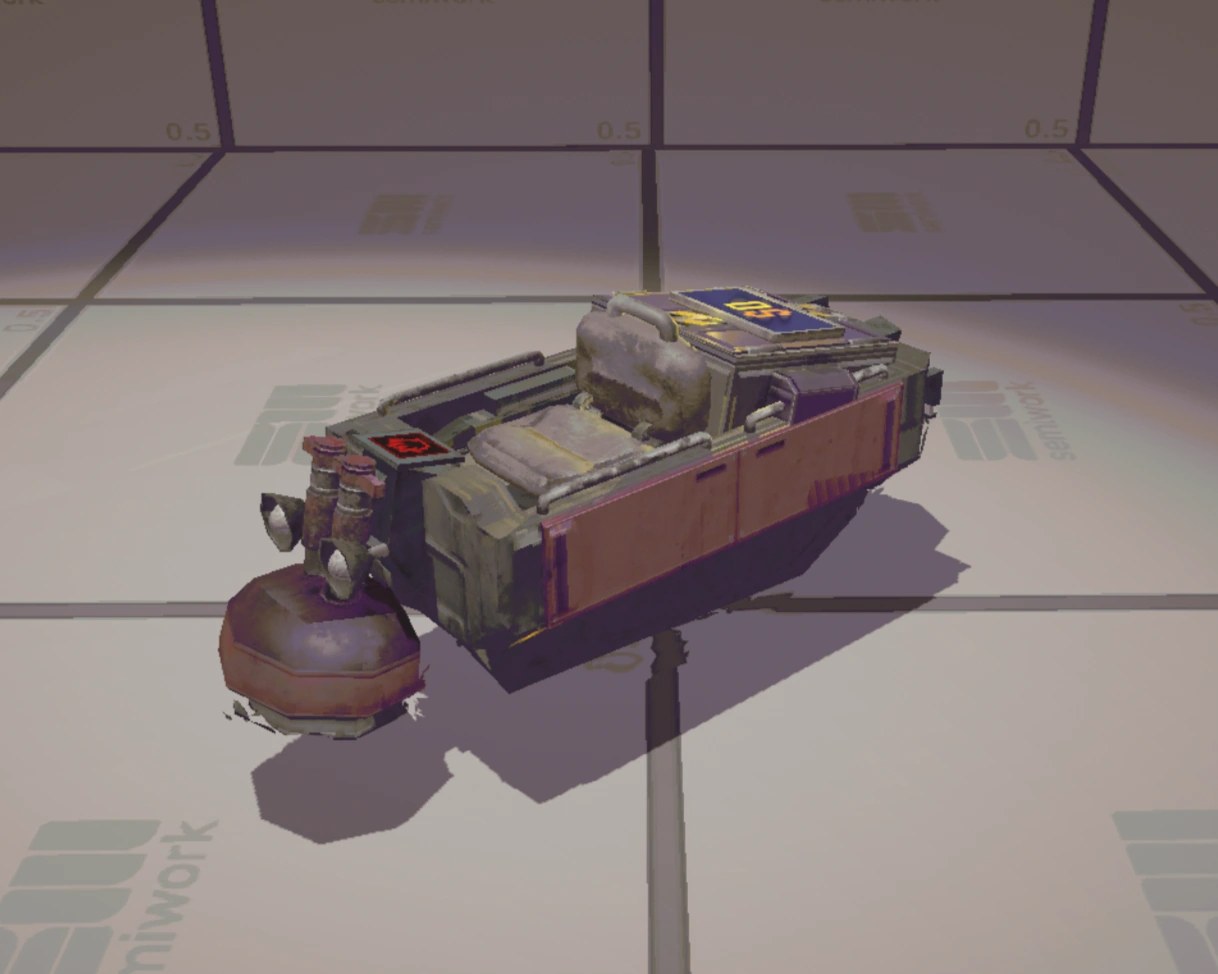 How the game behavesDriving a vehicle and staying uprightA vehicle is an item with a state and a timer of its own.
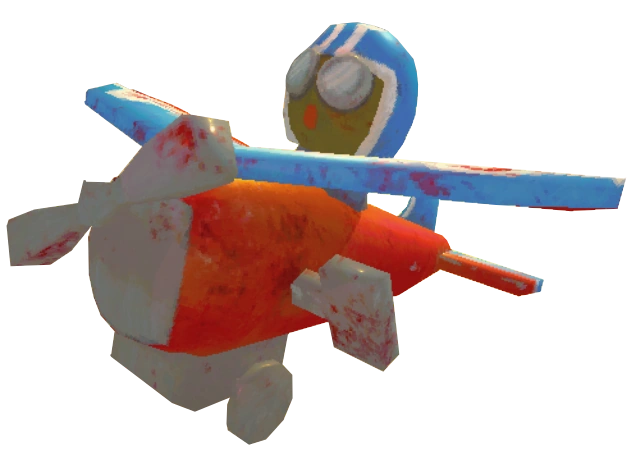 ValuablesThe car and the plane you can carryThe car has a body, front and rear wheels, a driver with a body and arms, and a curve for each.
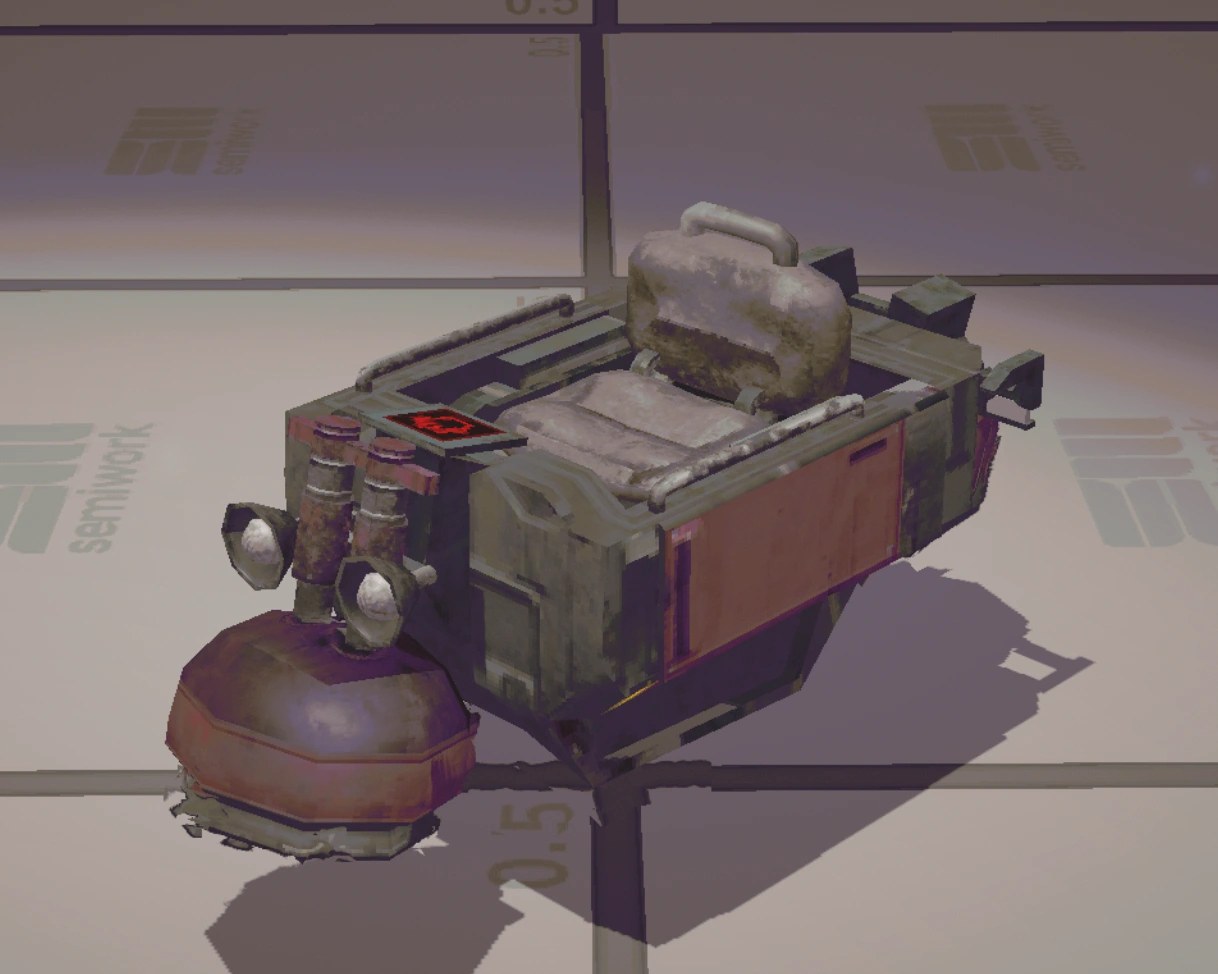 How the game behavesThe sounds a vehicle makesA vehicle's engine has a start and a stop of its own, with a pitch that runs between a minimum and a maximum.
Version and sources
A local copy of the game, read only. The grounding for each fact is listed on the technical reference pages; nothing here is estimated. Documented build: 0.4.0.