
Valuables · R.E.P.O. v0.4.0 · read from a local copy
The things that are not loot
There is a kind of object that is explicitly not a valuable.
Not everything that looks worth carrying in R.E.P.O. is a valuable: the game keeps a separate kind of object with its own health and durability, and a valuable can even hide behind a prop that switches it in.
What the game establishes
- There is a kind of object that is explicitly not a valuable. (checked against the game's own files)
- It has a physical, an audio and a durability preset of its own. (checked against the game's own files)
- It can have health, with a maximum and a value at which it is destroyed. (checked against the game's own files)
- Breaking it costs health in light, medium and heavy tiers. (checked against the game's own files)
- It has particle colours and its audio preset has a pitch. (checked against the game's own files)
- A valuable can be hidden behind a prop, with a parent for each, a name for the child and a debug switch. (checked against the game's own files)
- One valuable copies a mesh, starts at a position, spins at an angular velocity, lasts a set time and adds value. (checked against the game's own files)
- Discovery can be customised with a wait time, corner and middle colours, and its own sound and map. (checked against the game's own files)
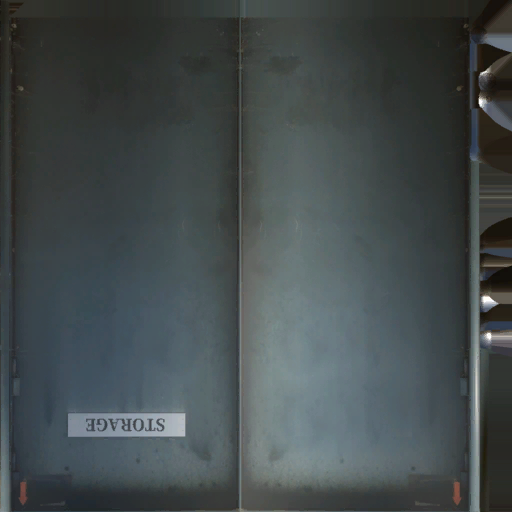
- The build names pieces of a level that are not loot at all, a storage-room door and a wet-floor sign among them, each with a texture of its own. (checked against the game's own files)
- The storage rooms are signed as well: the arctic theme names a sign for a storage yard and a sign for a warehouse, the second of them under two spellings. (checked against the game's own files)
- A theme can start a run in a storage room: a museum storage room and a wizard storage room are both named. (checked against the game's own files)
- A storage shelf can be named as filled, and a lab storage bin is a piece of its own. (checked against the game's own files)
In play
Not everything in a level that looks worth carrying is loot. The game keeps a kind of object that is explicitly not a valuable, and it is built to be broken rather than sold.
That object has presets of its own: a physical preset, an audio preset and a durability preset. Keeping the three apart is how the same object can be heavy in one level and fragile in another.
It can have health. There is a flag for whether it has any, a maximum, and a value at which it is considered destroyed, so an object can be worn down rather than only broken in one hit.
Breaking it costs health in three tiers: light, medium and heavy. That is the difference between a plate falling over and a shelf being driven into, and it is decided by the object rather than by the thing that hit it.
It has particle colours and its audio preset has a pitch, so what it sounds and looks like when it breaks is configured rather than borrowed from something else.
A valuable can be hidden behind a prop. There is a switch that holds a valuable and a prop together, with a parent for each and a name for the child, and a debug switch for testing it, which is how a valuable can be revealed rather than simply placed.
Some valuables move. There is one that copies a mesh, starts from a position, spins at an angular velocity, lasts a set time and then adds its value to the count — which is why catching it is a matter of timing.
Finding a valuable can be customised too. There is a discovery object with a wait before the tracker picks it up, corner and middle colours, and options for its own sound and its own map marker.
What this entry does not tell you: how much health any object has, what the break tiers cost, or how long an appearing valuable lasts. We have not verified those numbers, so we do not print them.
Related
 ValuablesThe valuables you can findValuables are sorted into a set of size kinds from tiny to very tall.
 ValuablesValuables that fight backSome valuables are built on a trap behaviour rather than being inert props.
Version and sources
A local copy of the game, read only. The grounding for each fact is listed on the technical reference pages; nothing here is estimated. Documented build: 0.4.0.